
Analysis timestamp: 7 August 2026, 08:39 WIB (UTC+7). GRTUSD is best assessed as a long-term infrastructure-token thesis rather than a conventional currency pair. The central question is not whether The Graph can generate attention, but whether broader use of its blockchain-data products creates durable demand for network services, higher fee activity, more GRT committed as economic security, and enough token burning to offset issuance. Exchange webpages accessed for this review displayed GRT near $0.014-$0.0144, although crypto prices can differ by venue and change rapidly. That low nominal price does not by itself indicate value; the relevant variables are adoption, token economics, execution, and market liquidity.
What The Graph is trying to become
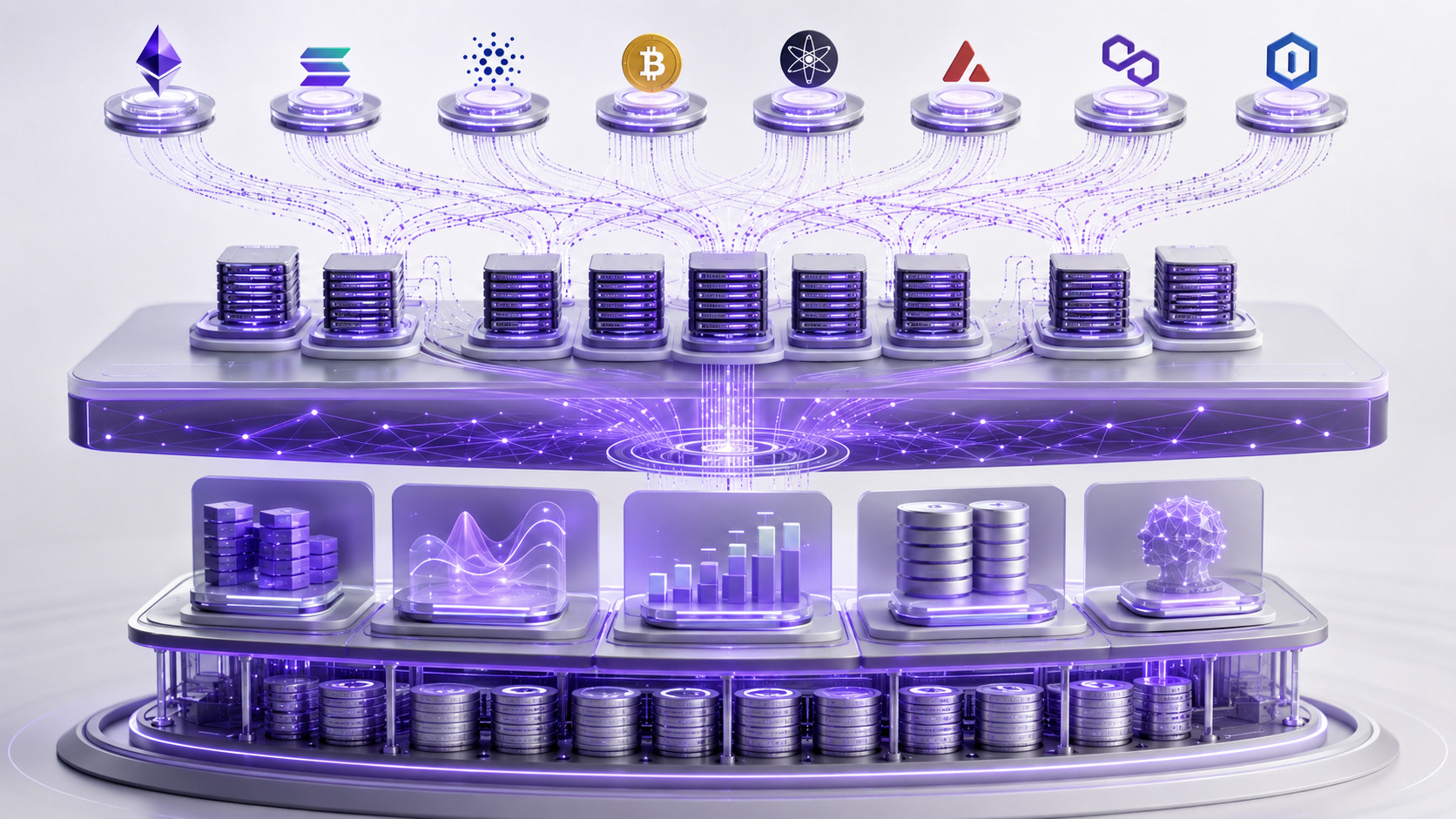
The Graph began as an indexing protocol that lets developers organize and query blockchain data through open APIs called Subgraphs. Its 2026 strategy is broader. The Horizon architecture is intended to turn the protocol into a modular, multi-service marketplace that can support Subgraphs, Substreams, Token API, analytics products, JSON-RPC-related services, and future data services through a common staking and payments layer. The official roadmap describes one core staking system for economic security, a unified payment mechanism, and a permissionless framework for adding services.
This expansion matters because the original addressable market was concentrated among blockchain application developers. The new product direction targets additional users, including data analysts, AI agents, institutions, and teams that need high-throughput or verifiable onchain data. The Graph's website reports more than 1.27 trillion queries served, over 75,000 projects, and more than 100 Indexer nodes. These are project-reported figures rather than audited financial metrics, but they indicate that the network is not starting from zero.
The fundamental value-accrual mechanism
GRT coordinates the network. Indexers stake GRT to provide indexing and query services, Delegators allocate GRT to Indexers, Curators signal on useful Subgraphs, and developers or consumers pay for queries. Indexers can receive query fees and indexing rewards. According to the protocol's tokenomics documentation, the initial supply was 10 billion GRT and the target annual issuance is 3%, primarily to reward Indexers. The same documentation says several mechanisms burn tokens, including delegation and curation taxes and a portion of query fees, and estimates annual burning at approximately 1% of supply.
This creates the most important long-term test. If issuance remains near 3% while burns remain near 1%, supply is still expanding on a net basis. A stronger GRT thesis therefore requires more than product launches. Network demand must rise enough to increase paid queries, fee settlement, burned GRT, and the amount of GRT economically required by service providers. The 2026 roadmap explicitly presents this intended flywheel: more services should produce more activity and fees, while additional services should require more staked GRT. However, this is a design objective, not a guaranteed valuation outcome.
GraphTally and x402 integration provide a practical example of this direction. The Graph Foundation says GraphTally has handled trust-minimized micropayments between gateways and Indexers since early 2025, while Subgraphs can now accept x402 payments from applications and software agents. If machine-to-machine data purchasing grows, an efficient pay-per-request layer could improve service usage. The unresolved issue is how much of that activity ultimately settles through token mechanisms that materially affect GRT demand and burns.
AI, enterprise data, and verifiability
The AI narrative has a concrete infrastructure angle. The Graph's MCP tooling provides natural-language access to more than 15,000 publicly available Subgraphs through a standardized interface. This may reduce the technical friction required for software agents and developers to discover and query onchain data. For long-term fundamentals, the relevant metric is not the number of AI announcements but whether agents generate recurring, paid requests that reach the decentralized network.
The enterprise thesis centers on reliability, provenance, and verifiable extraction. The Graph's recent materials describe Amp as a system designed to verify blockchain data during extraction and make it accessible for SQL-based analysis. The project is also pursuing compliance-ready products, on-premises deployment, and institutional support. These features could expand the addressable market, but enterprise sales cycles are often slow, requirements are demanding, and adoption can occur without producing immediate token demand. Investors should separate product-market progress from token-market value capture.
Roadmap catalysts through the end of 2026
The official roadmap places several important deliverables in the second half of 2026. Third-quarter objectives include a Substreams mainnet data service, expanded Token API capabilities, DIPs for the Subgraphs service, and a mainnet rollout of liquid staking. Fourth-quarter objectives include Amp-powered Subgraphs, Amp SQL development, verifiable raw blockchain data, an Amp service on Horizon, and further Substreams verification and rewards work. These milestones are potential catalysts only if they are delivered, used, and connected to sustainable economics.
Liquid staking deserves balanced treatment. Easier delegation may increase participation and improve capital efficiency, potentially making GRT more useful to custodians and exchanges. It can also add smart-contract, liquidity, governance, and concentration risks. Similarly, expanding GRT across several chains can improve accessibility, but bridges and cross-chain infrastructure introduce additional operational dependencies.

Conditional long-term scenarios
Bullish fundamental scenario
The constructive scenario requires Horizon services to move from roadmap items into recurring usage. Substreams, Token API, Amp, and AI-agent interfaces would need to attract customers that pay for data, while Indexers commit more GRT to serve those workloads. Query fees and burns would rise relative to issuance, and network security demand would become less dependent on inflationary rewards. In this case, GRT could gain a clearer role as productive economic collateral for a broader data marketplace.
Bearish fundamental scenario
The negative scenario is that technology adoption grows but token value capture remains weak. Developers may use products through subsidized gateways, enterprise contracts may not meaningfully touch GRT, or competing centralized and decentralized providers may limit pricing power. If paid demand remains modest while 3% target issuance continues and burns stay substantially lower, dilution pressure can persist. Delays in Horizon services, security incidents, governance disputes, declining Indexer participation, or weak crypto liquidity would add further pressure.
Thesis invalidation conditions
A long-term bullish thesis would weaken if several conditions appear together: repeated roadmap delays; limited growth in paid network usage; no sustained increase in GRT staked for new services; burns remaining structurally below issuance; reduced Indexer diversity; or product adoption that bypasses the token's economic layer. Conversely, evidence of rising fee-funded activity, broader service-provider participation, and a narrowing gap between issuance and burning would strengthen the fundamental case.
Technical context and market limitations
This review does not publish numerical support or resistance zones because the accessible exchange pages showed differing live prices and did not provide one consistent, verifiable long-term dataset at the analysis timestamp. Assigning exact levels from inconsistent snapshots would create false precision. Traders evaluating market structure should confirm current candles, volume, liquidity, and order-book depth directly on their chosen GRTUSD venue. For a long-term fundamental framework, a durable change in trend would be more credible if accompanied by improving protocol usage and token economics rather than price momentum alone.
Upcoming risk events
- 12 August 2026: the scheduled US Consumer Price Index release may affect expectations for liquidity and risk assets, including crypto markets.
- 15-16 September 2026: the scheduled Federal Open Market Committee meeting may alter rate expectations and broader market risk appetite.
- Q3-Q4 2026: The Graph's roadmap milestones for Substreams, liquid staking, Token API, DIPs, and Amp will be important execution checks.
Conclusion
GRTUSD's long-term case rests on a credible infrastructure problem: applications, institutions, and AI agents need structured and increasingly verifiable blockchain data. The Graph has a functioning network, a broader multi-service architecture, and a roadmap aimed at expanding demand. The main uncertainty is economic translation. More products and more queries are useful, but GRT fundamentals improve most clearly when activity produces paid fees, higher staking requirements, stronger service-provider participation, and burns that close the gap with issuance. Until that evidence becomes sustained, GRT remains a high-risk crypto asset whose protocol progress and token performance may diverge. This analysis is informational and does not constitute financial advice, a trading signal, or a forecast of returns.