
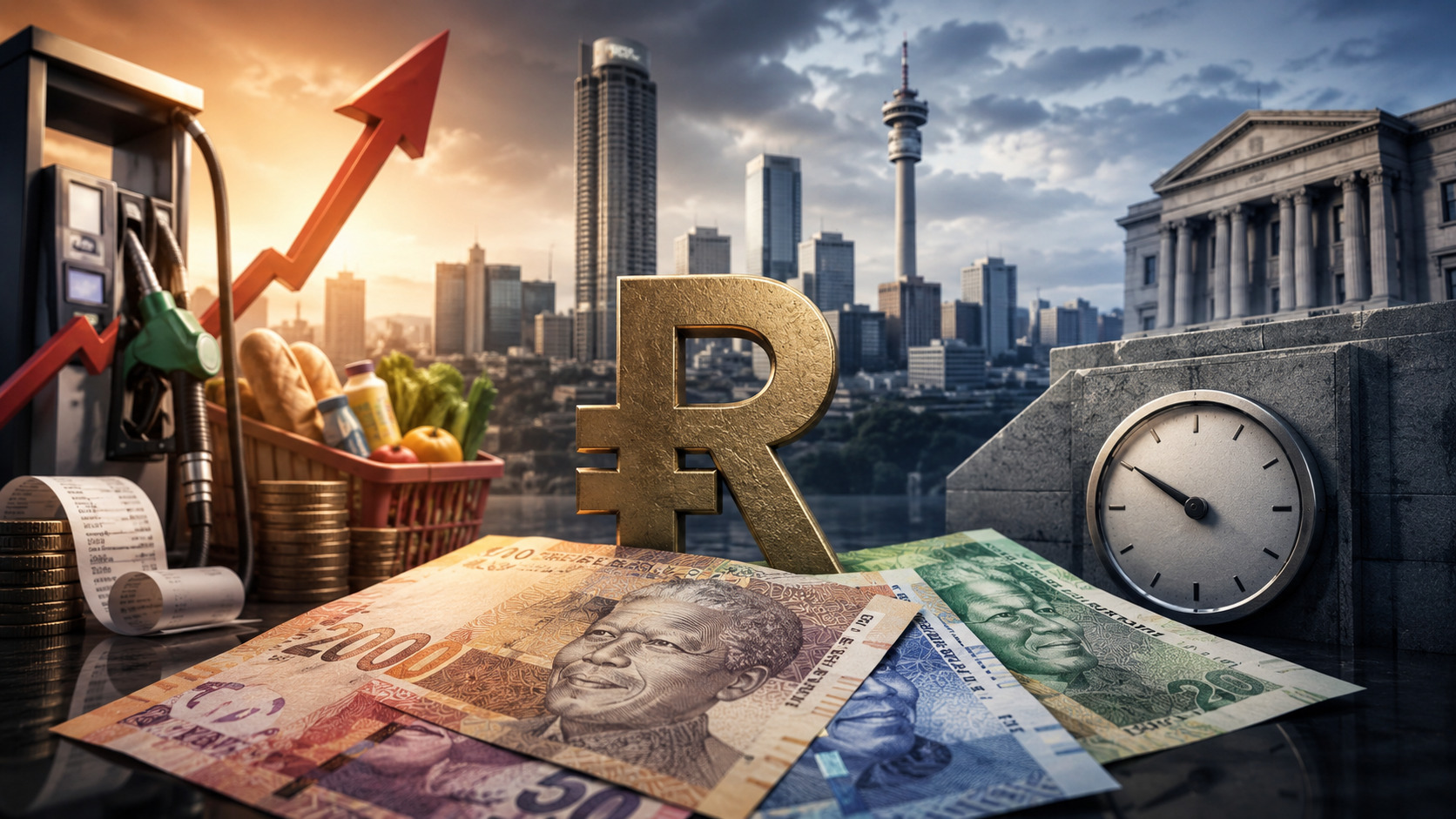
South Africa's latest official inflation reading has created an uncomfortable split for the economy and the rand. Consumer inflation rose to 5.0% year-on-year in June 2026, up from 4.5% in May, according to Statistics South Africa. The data were released on July 22, so the 5.0% figure describes June price changes rather than conditions on the publication date. As of August 18, it remains the latest official CPI reading, with July CPI scheduled for release on August 19.
For households and businesses, 5.0% inflation is clearly unwelcome. It erodes purchasing power, raises operating costs and complicates an economy already facing weak confidence and very high unemployment. For the rand, however, the market implications are less straightforward. Higher inflation can keep the South African Reserve Bank cautious and interest rates elevated, which can support the currency through relatively attractive local yields. Yet inflation can also weaken the rand if investors see it as evidence of deteriorating fundamentals or if the price shock damages growth.
What changed in South Africa's inflation data?
Stats SA reported that annual CPI accelerated to 5.0% in June from 4.5% in May and 4.0% in April. Consumer prices rose 0.7% month-on-month in June. The June annual rate was the highest since June 2024, when inflation stood at 5.1%.
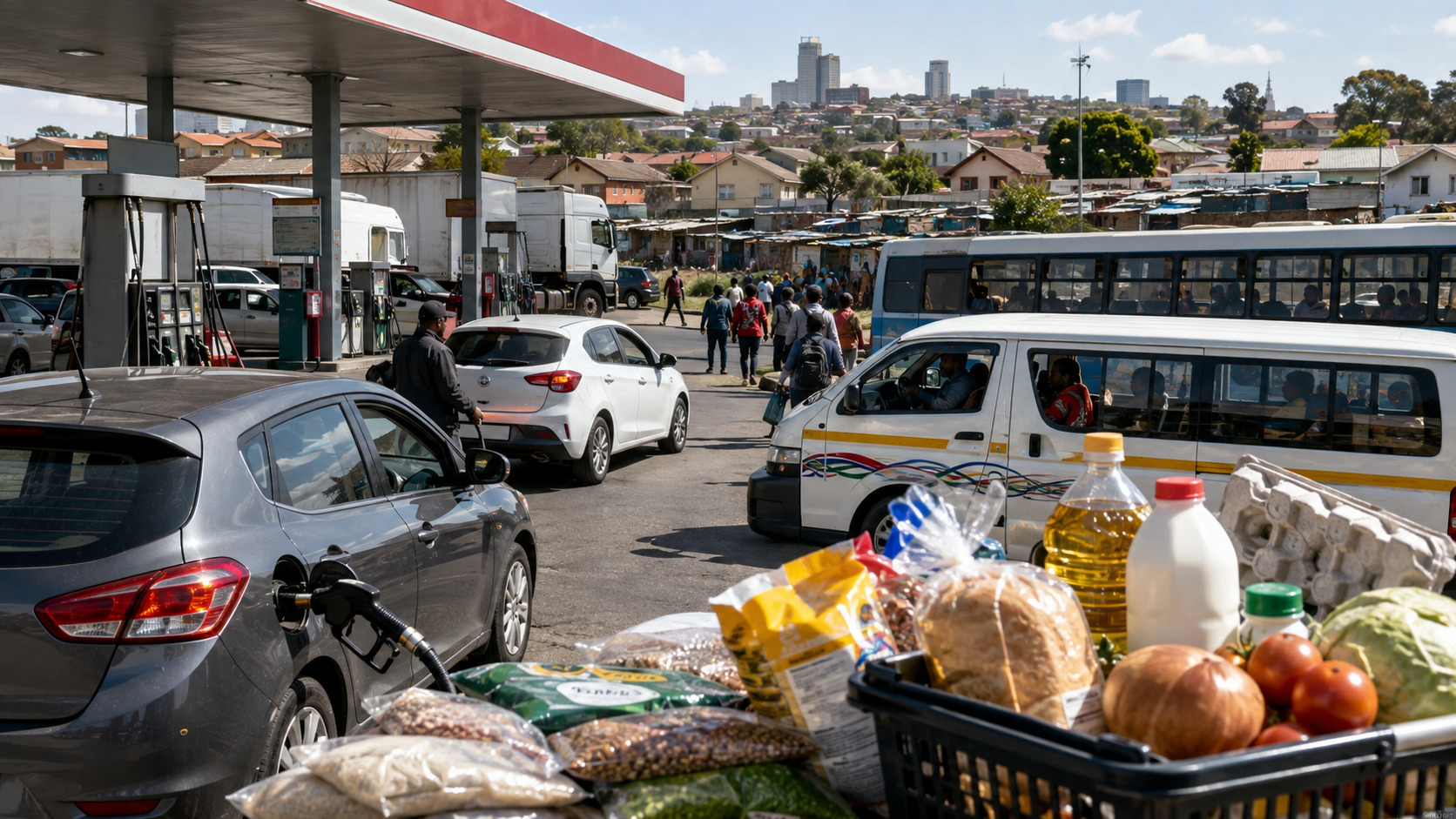
The biggest driver was transport, especially fuel. Transport inflation accelerated to 12.7% year-on-year in June from 9.4% in May, while fuel prices were 34.3% higher than a year earlier. Diesel prices were up 50.8% year-on-year and petrol prices 31.7%. Passenger transport costs also rose sharply during the month.
There was an important offset. Food and non-alcoholic beverage inflation slowed to 1.6% in June from 1.9% in May and 2.9% in April. That means the headline increase was not a broad-based surge across every major household category. Still, the Reserve Bank said in July that services inflation and measures of underlying inflation were showing stronger pressure, while inflation expectations had also moved higher.
Why 5% inflation is bad news for the economy
The first problem is that 5.0% is above South Africa's current inflation objective. The policy framework was revised in 2025 to a 3% target with a tolerance band of plus or minus one percentage point. In other words, the formal tolerance range is 2% to 4%, although the central goal remains 3%. A 5.0% reading therefore sits above that band.
The second problem is the source of the inflation. Fuel-driven inflation acts much like a tax on households and businesses because energy and transport costs filter through to commuting, logistics and production. The Reserve Bank has explicitly warned that the economy faces downside risks to growth and that households have been hurt by higher fuel prices.
Labour-market data reinforce the weak-growth backdrop. Stats SA reported on August 11 that the official unemployment rate increased to 33.6% in the second quarter of 2026 from 32.7% in the first quarter. The number of unemployed people rose by 345,000 to 8.5 million, while employment declined by 16,000 to 16.7 million. Earlier GDP data showed the economy expanded by 0.5% quarter-on-quarter in the first quarter, but the Reserve Bank said in July that it expected slower growth through the second and third quarters.
This combination matters because inflation created by supply shocks does not necessarily signal a strong economy. If prices rise because fuel becomes more expensive while employment and confidence weaken, policymakers face a difficult trade-off: lowering rates could ease pressure on activity but risk leaving inflation above target, while keeping rates high can restrain demand further.
Why higher inflation can still support the rand
The potential positive channel for the rand comes through monetary policy. In May, the Reserve Bank raised its policy rate by 25 basis points to 7.0%, effective May 29, citing intensified inflation risks. At its July 23 meeting, the Monetary Policy Committee kept the rate at 7.0%. Four members supported the hold and two preferred another 25-basis-point increase.
Higher local interest rates can make rand-denominated assets more attractive relative to lower-yielding alternatives, all else equal. The Reserve Bank itself explains that higher interest rates can strengthen the rand by improving returns on rand-based investments. A stronger currency can then help limit imported inflation.
Recent official exchange-rate data are consistent with a resilient rand, but they do not prove that inflation caused the move. The Reserve Bank's selected rates showed ZAR/USD at 16.1558 on August 17, compared with 16.5247 on July 31. Because the quote is rand per US dollar, a lower number represents a stronger rand. The July MPC statement also said the exchange rate had remained resilient and was close to where it started the year against the dollar.
For forex traders, the key distinction is between inflation itself and the policy response to inflation. A higher CPI print may support the rand if it increases expectations that rates will remain high or rise further. The same CPI print may hurt the rand if it is interpreted as a damaging supply shock that weakens growth, worsens fiscal pressures or reduces investor confidence.

What could change the rand narrative next?
The most immediate risk event is the July CPI release scheduled by Stats SA for August 19. A softer reading would suggest that June's 5.0% spike was more temporary, especially if fuel pressure fades. That could reduce the need for prolonged monetary restraint. A stronger or more persistent reading, particularly if services and underlying inflation remain elevated, could reinforce the case for rates staying restrictive for longer.
Oil remains another major uncertainty. In July, the Reserve Bank said the inflation outlook depended heavily on global oil prices and the Middle East conflict. Its adverse scenario assumed substantially higher oil prices and produced more persistent inflation and tighter monetary policy, while a more favourable oil path allowed inflation to return to target faster. These were scenarios rather than forecasts, but they show why the rand can react to global energy news even when domestic data are unchanged.
Inflation expectations are also important. If households, firms and wage setters begin to expect persistently higher inflation, temporary fuel shocks can become broader and harder to reverse. The Reserve Bank said its July risk assessment showed that rising expectations could create additional wage and core-inflation pressure.
Finally, global market conditions can dominate domestic fundamentals. The rand is an actively traded emerging-market currency and can weaken during periods of broad risk aversion or US-dollar strength even when South African rates are high. The July MPC statement noted that the US dollar had strengthened amid shifts in global interest-rate expectations.
Bottom line
South Africa's 5.0% inflation rate is economically negative because it raises household costs, sits above the current tolerance band and complicates policy at a time of weak labour-market conditions. But it is not automatically negative for the rand. If the inflation shock keeps the policy rate elevated and the Reserve Bank maintains credibility, the yield and policy channels can provide currency support.
The opposite outcome remains possible. If inflation proves persistent because of oil, services or expectations while growth deteriorates, the rand could face pressure despite high rates. The next CPI release on August 19 will therefore be more informative than the 5.0% headline alone. For traders, the relevant question is not simply whether inflation is high, but whether it is becoming more persistent and how that changes the expected path of South African monetary policy relative to global rates.
This article is for informational purposes only. It is not financial advice, a trading signal, a personalized recommendation or a promise of future market performance.