
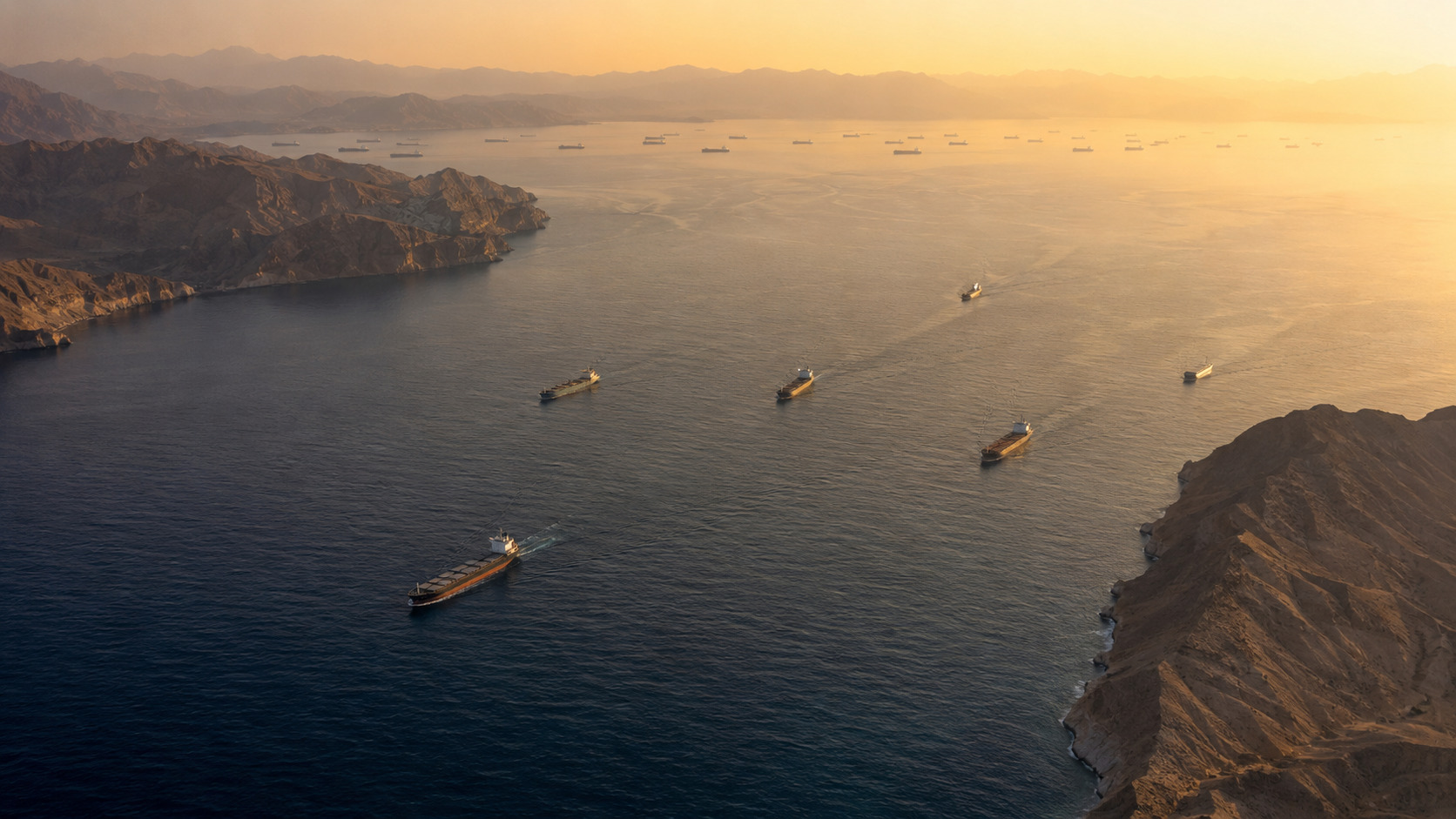
Only eight vessels crossed the Strait of Hormuz on Tuesday, August 4, according to ship-tracking data reported by Reuters on August 5. Before the war began on February 28, the same waterway normally handled about 130 to 140 ship transits a day. The comparison is stark: traffic is moving, but it is operating at only a small fraction of its former rhythm.
The eight confirmed transits included five tankers and three bulk carriers. Six vessels were entering the Persian Gulf, while a gas carrier and a tanker were leaving. The total was unchanged from Monday, making the latest reading a sign of stagnation rather than acceleration. It also challenges any assumption that diplomatic optimism has already translated into an operational reopening.
What the eight-versus-140 comparison actually shows
The headline figure is useful because it separates a technically passable strait from a commercially normalized one. A few successful crossings demonstrate that Hormuz is not completely sealed. They do not show that shipowners, crews, charterers, insurers and cargo buyers consider the route reliably safe.
At eight transits against a normal range of 130 to 140, observed traffic was roughly 6% of the pre-war daily level. That percentage should not be treated as a precise measure of total physical movement because some vessels may travel with their Automatic Identification System transponders switched off. Reuters explicitly noted that such dark movements would be absent from the count. Even allowing for that limitation, the visible gap remains too wide to describe the route as restored.
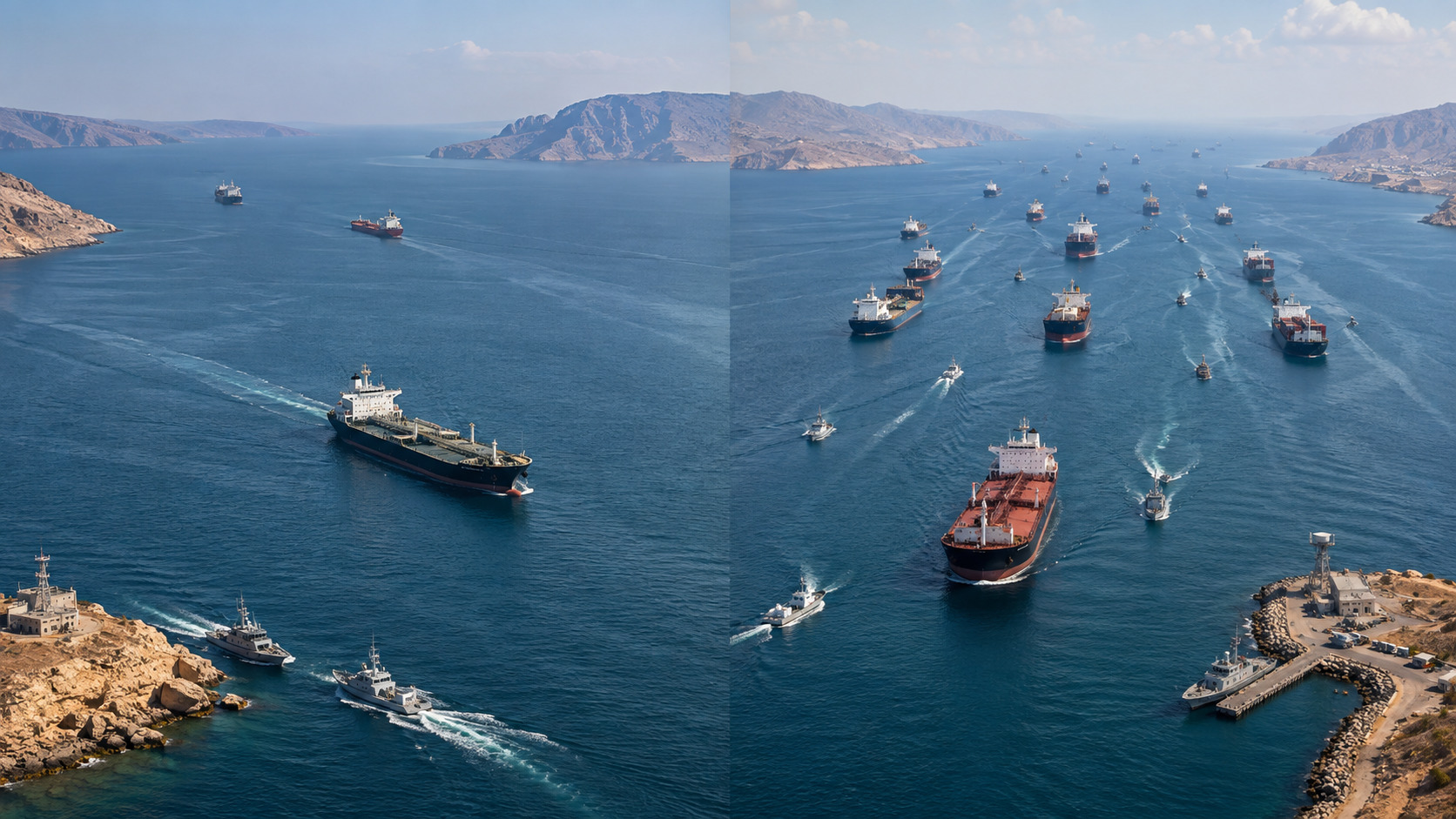
The composition of the eight ships is also important. Tankers and bulk carriers are moving, but one day of mixed traffic does not prove that scheduled energy exports, container services and other commercial flows can resume at scale. A durable recovery would require repeated increases over many days, fewer security incidents, clearer navigation rules and enough confidence for large fleets to return.
A recovery attempt has already suffered reversals
The current disruption began after the United States and Israel attacked Iran on February 28 and Iran responded by closing or restricting the strait. An interim memorandum reached on June 18 was followed by increased traffic, prompting the U.S. Energy Information Administration in July to forecast that global oil production and trade flows could approach pre-conflict levels by the end of 2026. The latest transit count shows why that forecast remains conditional.
Security conditions deteriorated again after the June arrangement. On July 7, UK Maritime Trade Operations reported that a tanker transiting Hormuz had been struck by an unidentified uncrewed aerial vehicle. The vessel sustained minor structural damage and continued its voyage, with no casualties or environmental impact reported, but the incident reinforced the operational risk facing crews and operators.
On July 8, the International Maritime Organization condemned renewed attacks and said hundreds of ships carrying about 6,000 seafarers remained stranded in the Persian Gulf. The IMO urged authorities and operators not to expose crews to unnecessary danger while safety could not be assured. Those warnings help explain why traffic can remain depressed even when political officials say negotiations are progressing.
Diplomatic progress is real, but the terms remain disputed
Regional officials told the Associated Press on August 4 that Iran and Oman had made progress toward an arrangement for safe navigation. One version under discussion would place inbound traffic on an Iranian-controlled route and outbound traffic on an Omani-controlled route, potentially with service fees related to security and environmental protection.
That proposal is not a completed agreement. The United States has opposed any structure that would give Iran approval authority over passage or impose charges, while Iranian officials have said their discussions are with Oman rather than direct negotiations with Washington. U.S. officials have acknowledged progress but have not announced final terms. These conflicting descriptions mean the political headline and the operational reality can move in different directions.
A separate Reuters report published on August 5 said oil prices extended their decline as traders waited for the outcome of diplomatic efforts. At 03:30 GMT, Brent crude futures were reported at $78.44 a barrel, down about 1.2% on the day after steep losses earlier in the week. The price response shows that markets are assigning value to the possibility of reopening, even though the shipping data has not yet confirmed a broad recovery.
Why Hormuz still matters to global markets
The Strait of Hormuz is difficult to replace because it connects Persian Gulf exporters with the Gulf of Oman and the Arabian Sea. U.S. Energy Information Administration data show that about 20.9 million barrels per day of oil moved through Hormuz in the first half of 2025, equal to about one-fifth of global petroleum liquids consumption and one-quarter of maritime-traded oil. More than 20% of global liquefied natural gas trade also crossed the strait, primarily from Qatar.
Available bypass pipelines cannot absorb the full volume. The EIA estimated that the main Saudi and Emirati routes together could provide about 4.7 million barrels per day of alternative capacity, far below normal Hormuz oil flows. This imbalance is why even partial disruption can affect freight costs, insurance, refinery planning, fuel prices and inflation expectations well beyond the Middle East.
What forex traders should monitor
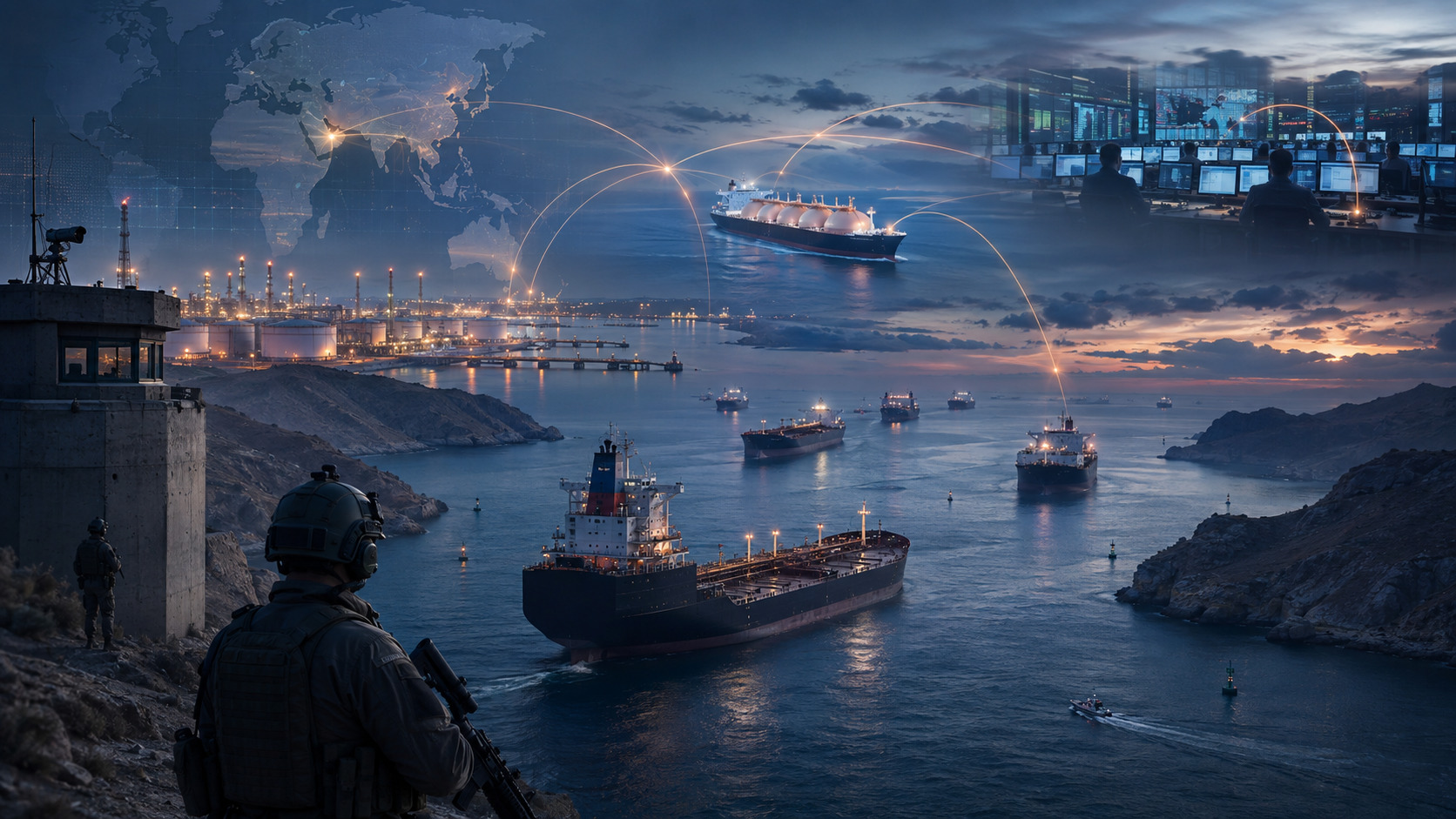
For currency markets, the key issue is not simply whether one ship crosses, but whether energy supply risk is falling in a sustained way. A credible reopening could reduce the geopolitical premium in oil, ease concern about imported inflation and improve risk sentiment. A failed agreement or another attack could reverse those effects quickly.
Oil-linked currencies may react differently from currencies of large energy importers because changes in crude prices affect trade balances, government revenue and inflation expectations in different ways. Safe-haven demand can also complicate the picture during escalation. These are transmission channels, not guaranteed directional signals, and their influence can be outweighed by central-bank policy, domestic data or broader dollar moves.
Three indicators are more informative than diplomatic statements alone: the number of daily transits over a multi-day period, the mix of vessel types returning to the route and independent security advisories from bodies such as UKMTO and the IMO. Insurance availability, crew willingness and the behavior of major shipping companies are also essential, although these data are not always immediately public.
What remains unknown
The true number of crossings may be higher than the visible count because ships can disable transponders. The identities, cargoes and commercial terms of all transiting vessels are not fully disclosed. It is also unclear whether the proposed navigation arrangement would be temporary, who would enforce it, whether fees would be permitted and what security guarantees would be offered to shipowners and crews.
One LNG movement illustrates both progress and its limits. Reuters reported that ADNOC-controlled tanker Mubaraz departed Das Island on July 14, exited Hormuz and was approaching India’s Dahej terminal for an expected August 5 arrival. It was the vessel’s third loaded departure from the Gulf since the war began. That is evidence that selected cargoes can move, but three voyages do not establish dependable system-wide access.
The practical conclusion
The latest data support a narrow conclusion: Hormuz is seeing limited movement, not normal operations. Eight confirmed crossings are better than none, but they remain far below the 130 to 140 daily transits seen before February 28. Until traffic rises consistently, attacks stop and a recognized safe-passage framework is implemented, any claim that the strait has recovered should be treated cautiously.
For traders, the mismatch between optimistic diplomacy and weak physical traffic is the central risk. Markets may price a reopening before ships return in force, creating sharp reactions to both confirmation and disappointment. The eight-versus-140 figure is therefore more than a dramatic comparison; it is a reminder that physical flows remain the most important test of whether the Hormuz crisis is actually easing.