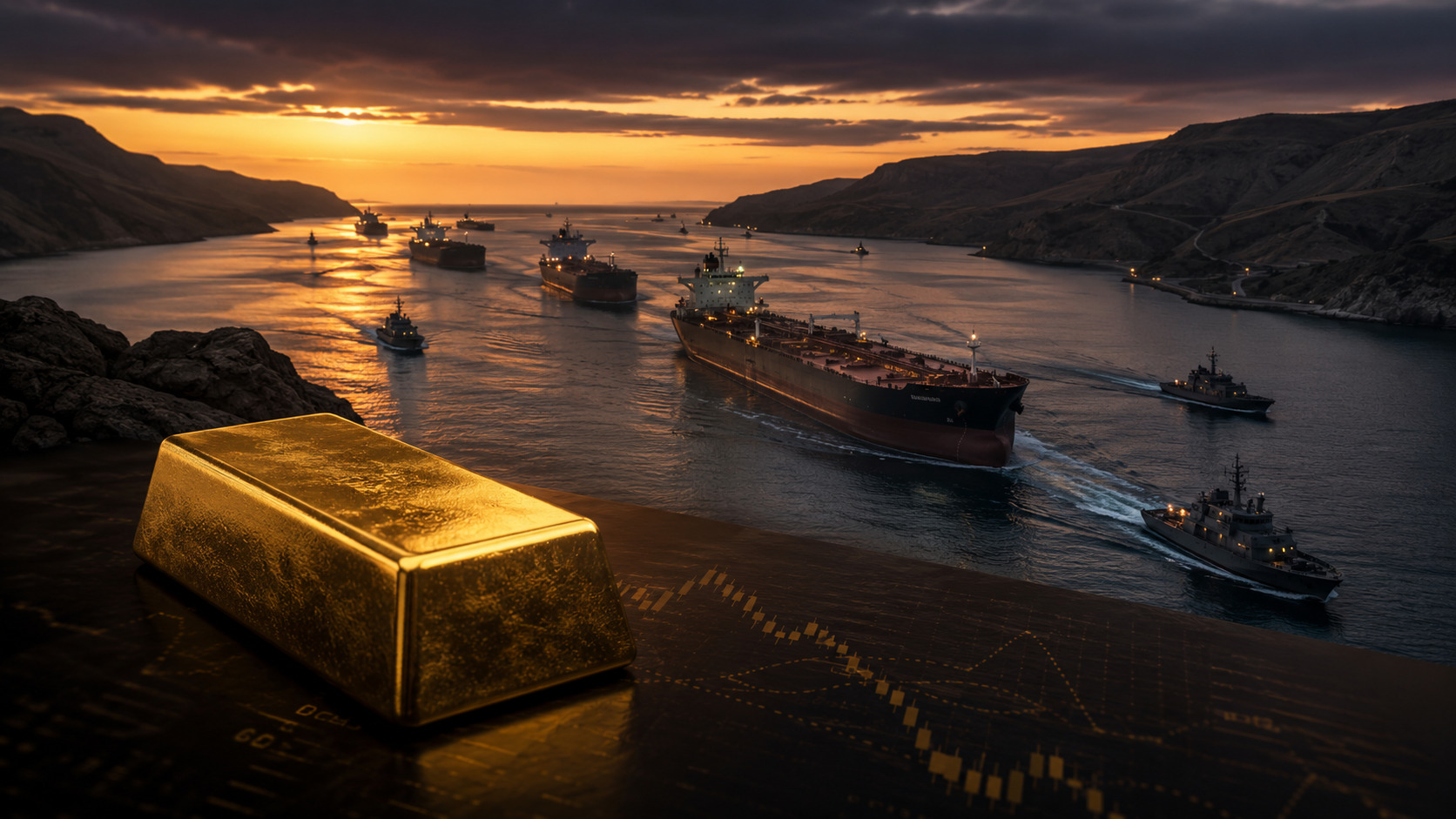
Fresh maritime security incidents near the Strait of Hormuz have put oil traders, gold traders, and forex market participants back on alert. In late July and early August 2026, official shipping advisories documented an attack on a tanker off Oman and additional reports of threats and explosions involving vessels transiting the Strait of Hormuz in Omani territorial waters. For traders watching XAUUSD and broader cross-asset sentiment, the market significance goes beyond shipping headlines. The Strait of Hormuz is one of the world’s most important energy chokepoints, so even limited disruption can quickly ripple into oil prices, inflation expectations, bond yields, currencies, and safe-haven flows.
That is where the paradox begins. A Hormuz crisis can support gold because geopolitical stress usually increases demand for defensive assets. But the same crisis can also pressure gold if higher oil prices feed inflation concerns strongly enough to lift Treasury yields and the U.S. dollar. For beginner and intermediate forex traders, this is an important distinction: gold is not only a fear asset. It is also a non-yielding asset whose performance can be shaped by how the energy shock changes interest-rate expectations.
What happened around Hormuz
The latest round of official alerts started with a UKMTO warning issued on 1 August about an incident reported late on 31 July 2026. According to the advisory, a tanker 11 nautical miles northeast of Lima, Oman, was struck by an unknown projectile that damaged the engine room. The vessel was reported not under command, with no casualties or environmental impact reported at that stage, and authorities said the case was under investigation.
Then, in its advisory update published in early August, the Joint Maritime Information Center summarized two linked reports received on 2 August from tankers transiting the Strait of Hormuz. One vessel reportedly reversed course after VHF threats from a party claiming to be the Sepah Navy and after hearing of a distant explosion. A second tanker reported warning shots from the north and an explosion roughly 1.5 nautical miles away. The next day, on 3 August, another vessel in the Strait of Hormuz was reportedly struck by an unknown projectile, leading to a fire, loss of power, evacuation of most crew, and one crew member reported missing. These events do not amount to a confirmed closure of the waterway, but they do show a clear rise in navigational and security risk.
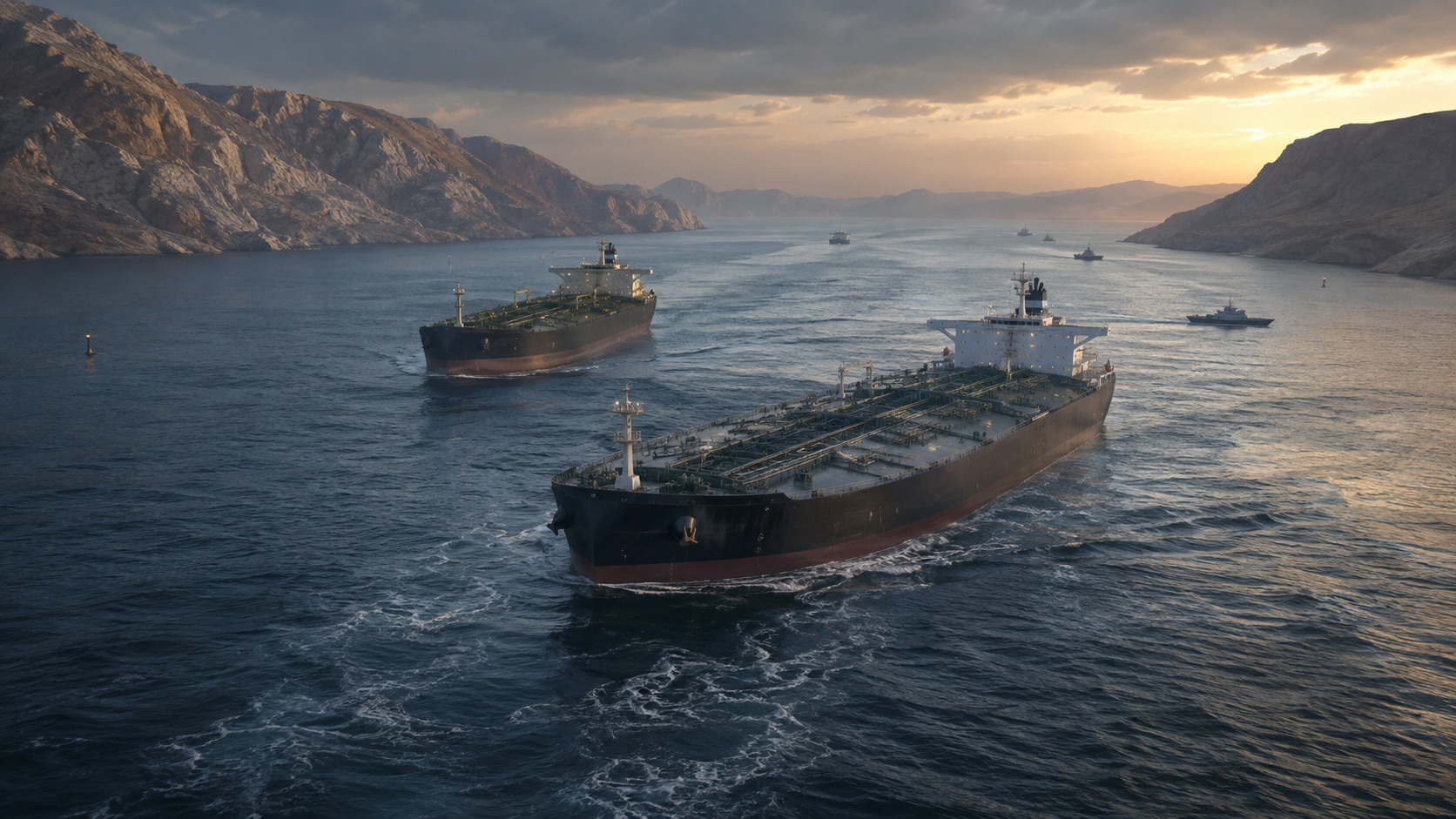
That matters because official energy analysis from the U.S. Energy Information Administration continues to describe the Strait of Hormuz as the world’s most important oil transit chokepoint. Large volumes of crude oil, condensate, petroleum products, and liquefied natural gas move through this narrow passage. In practice, that means the market does not need a full blockade to react. A rise in insurance costs, shipping delays, route changes, or precautionary slowdowns can be enough to reprice energy risk.
Why a Hormuz shock can lift gold
The bullish case for gold in this kind of story is the easier one to understand. When a strategically vital shipping route looks less secure, markets often reduce exposure to riskier assets and increase exposure to assets perceived as stores of value or hedges against uncertainty. Gold has historically played that role. The logic is straightforward: if traders fear military escalation, supply disruption, or wider regional instability, demand for gold can rise alongside demand for other defensive assets.
The London Bullion Market Association’s Q2 2026 market report helps explain why this remains relevant. The report notes that geopolitical disruption and the conflict involving the United States, Israel, and Iran were major features of gold trading this year. It also observed that conflict has historically supported gold as investors seek out a long-established safe haven. That same report is useful for another reason: it shows just how volatile gold has already been in 2026. LBMA said the gold price reached an all-time high of $5,501.70 on 29 January 2026 before falling sharply into late June. In other words, gold is already trading in an environment where geopolitics matters, but its reaction has not been linear.
For forex readers, the immediate transmission channel is often sentiment. If Hormuz tensions intensify, traders may initially focus on the headline risk itself: possible shipping disruption, higher energy prices, and broader instability across the Middle East. In that first phase, gold can benefit from its reputation as a crisis hedge. The move may be strongest if the market believes the disruption could spread, or if there is little confidence in a quick diplomatic resolution.
Why the same shock can pressure gold
The bearish side of the paradox begins when the market moves beyond the security headline and starts pricing the macro consequences of more expensive energy. Oil matters because it feeds directly and indirectly into inflation. If crude and fuel prices rise, investors may conclude that central banks will need to keep policy tighter for longer, or at least delay any easing that markets had expected earlier. That can raise nominal yields, lift real rates, and support the U.S. dollar—all of which can become headwinds for gold.
This is not merely theoretical in 2026. In the Federal Reserve’s July 2026 Monetary Policy Report, the central bank said a surge in energy prices was associated with constraints on oil supplies following the start of the Middle East conflict in late February. The report also said some measures of shorter-term inflation expectations moved higher after the jump in energy prices. Separately, in the minutes of the Fed’s 16–17 June 2026 meeting, policymakers noted that developments related to the conflict in the Middle East had affected financial markets and that, over the intermeeting period, expected policy rates, Treasury yields, and the U.S. dollar all rose.
This is the crucial point for gold traders. Gold does not pay interest. When yields rise, the opportunity cost of holding gold also rises. If the dollar strengthens at the same time, gold can face an additional headwind because it becomes more expensive in non-dollar terms. That means the same Hormuz shock that initially encourages safe-haven buying can later weigh on the metal if the dominant market narrative turns from “geopolitical fear” to “inflation and tighter financial conditions.”
LBMA’s Q2 2026 report captured that exact dynamic. It argued that while geopolitical stress encouraged buying, the conflict also introduced another key price driver: the specter of inflation, prompted by oil. That observation is especially useful because it explains why gold can sometimes rise on the first wave of headlines and then stall, reverse, or become much more volatile once bond markets and central bank expectations adjust.
What traders should watch next
For now, several uncertainties remain unresolved. Official advisories document attacks, threats, and suspicious activity, but they do not yet show a confirmed, sustained closure of the Strait of Hormuz. The identity of the actors behind some incidents remains under investigation, and some claims heard over radio communications were not independently verified in the advisories. That matters because markets can swing sharply depending on whether the next update points to containment, retaliation, or de-escalation.
Another uncertainty is duration. A short-lived disturbance can produce a sharp but temporary move in oil, while a prolonged security problem can have more persistent effects on inflation expectations, shipping behavior, and monetary-policy pricing. The June Fed minutes already showed how quickly financial conditions can reprice around Middle East developments. The same document also suggested that optimism around a near-term resolution and a memorandum of understanding between the United States and Iran had pushed the oil futures curve and near-term inflation compensation lower relative to earlier levels. In simple terms, if markets think the crisis will fade, some of the oil premium can unwind, and gold may lose one source of support even if political uncertainty does not disappear entirely.
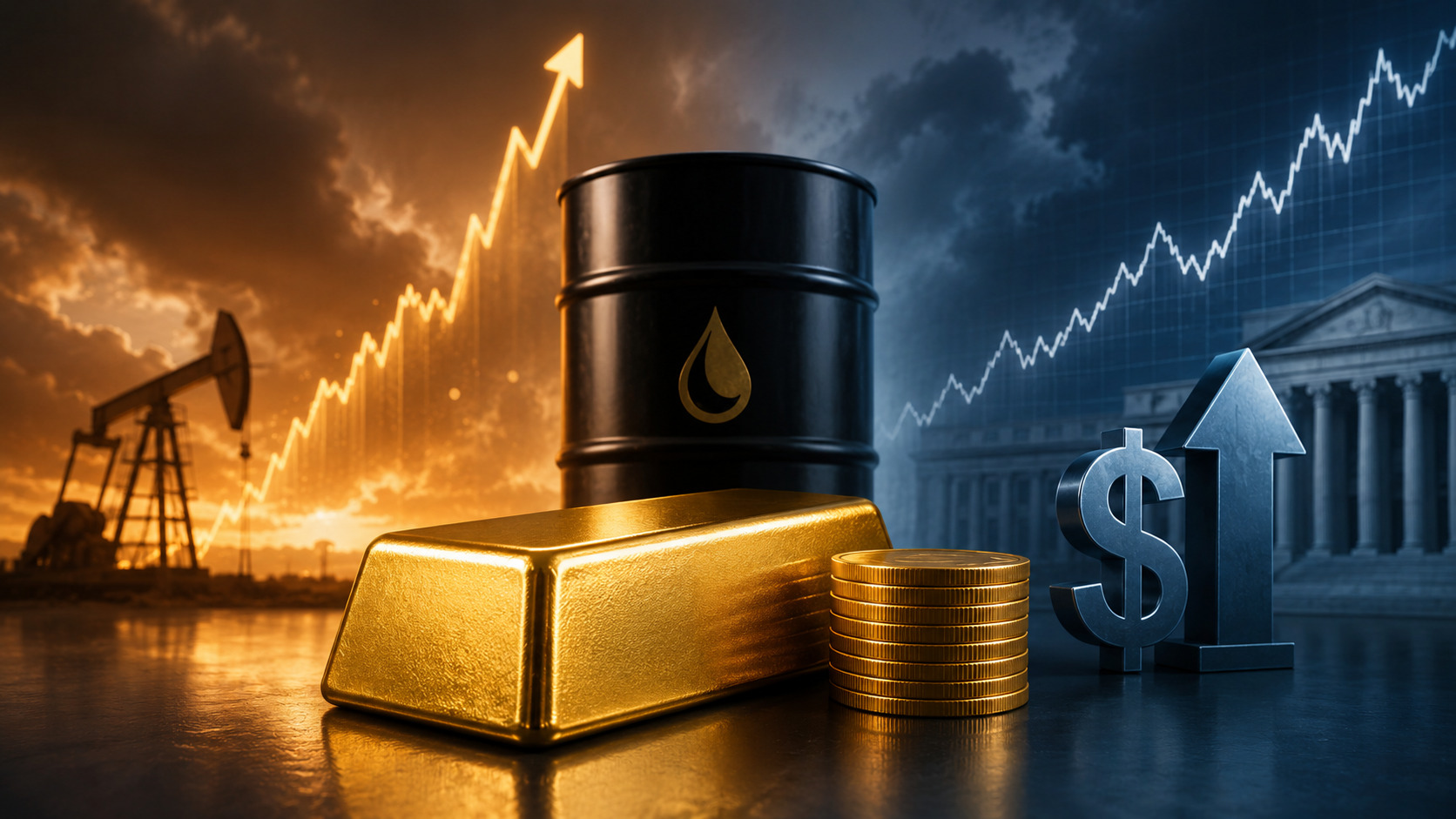
For beginner and intermediate forex traders, the practical takeaway is analytical rather than prescriptive. A Hormuz crisis should not be read as automatically bullish for gold or automatically bearish for gold. The first impulse is often safe-haven buying. The second-stage reaction depends on whether the oil shock proves large and durable enough to lift inflation expectations, yields, and the dollar. Watching only the geopolitical headline is not enough. Traders also need to watch the bond market, the dollar, and central-bank communication to understand which side of the paradox is in control.
As of 10 August 2026, the Strait of Hormuz story is still one of elevated risk rather than resolved facts. Shipping security alerts have increased. Oil-market sensitivity remains high because of the waterway’s strategic role. Gold, meanwhile, sits at the center of two competing narratives: fear-driven demand on one side, and oil-driven macro tightening on the other. That tension is exactly why the Hormuz issue matters so much for cross-market traders, and why the next few official updates could shape both energy and precious-metals sentiment far beyond the Gulf.
This article is for informational purposes only and is not financial advice, a trading signal, or a personalized recommendation.