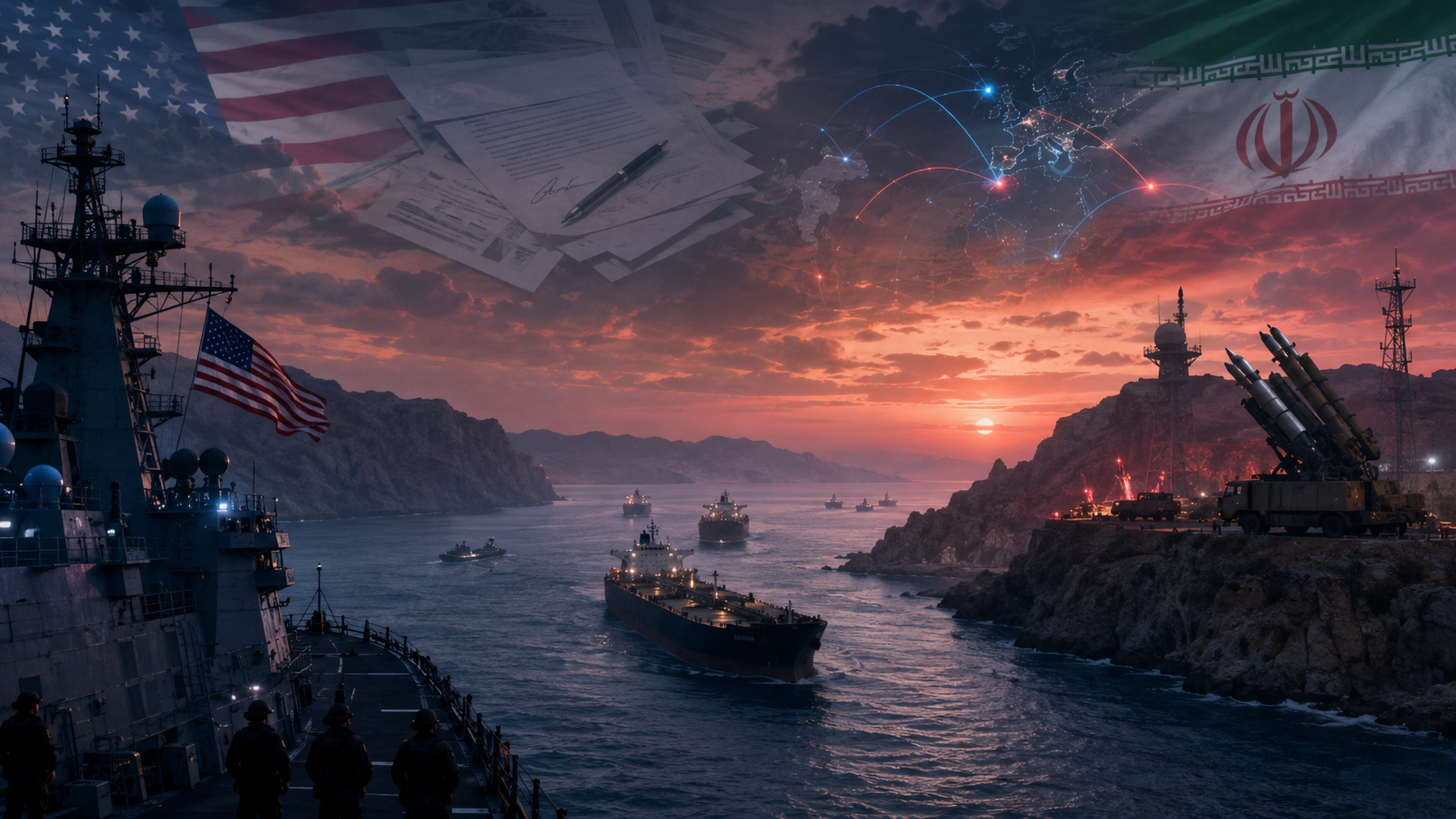
As of July 22, 2026, relations between the United States and Iran are in a dangerous but still fluid phase. Military exchanges have intensified again, shipping risks have spread from the Strait of Hormuz toward the Red Sea, and both governments continue to accuse the other of violating earlier understandings. At the same time, diplomatic channels have not fully closed. U.S. Secretary of State Marco Rubio said Washington remains willing to negotiate, while regional mediators are reportedly discussing a temporary ceasefire designed to stop the latest escalation.
For forex traders, the central issue is not only whether the conflict expands. The more immediate question is whether energy flows, inflation expectations, risk sentiment, and central-bank pricing are being affected. These channels can move the U.S. dollar, gold, oil-linked currencies, Asian currencies, and broader risk assets even when battlefield information remains incomplete.
What is the latest development?
Reuters reported that U.S. forces carried out strikes on Iranian targets for an eleventh consecutive night into July 22. Iranian officials said locations in Bushehr Province were hit, including an electricity installation near Iran's only operating nuclear power plant. Iran's military separately claimed that it launched drones toward U.S. military facilities in Kuwait, Jordan, and Bahrain. Reuters said it could not immediately verify the details of those Iranian claims.
The latest fighting follows the breakdown of a June memorandum that had been presented as a framework for ending the conflict and reopening the Strait of Hormuz. The White House described that agreement as a major diplomatic breakthrough. Iran, however, has since accused Washington of violating the arrangement through renewed attacks and a naval blockade. The U.S. position is that Tehran failed to keep its commitments. These competing accounts are politically important, but traders should treat both governments' claims as advocacy rather than independently established fact.
Is diplomacy still possible?
Diplomacy remains active, although there is no confirmed new agreement. Rubio said in Manila that the United States was still open to a negotiated settlement, but he argued that Iran had not treated previous commitments seriously. Reuters reported that an Iranian official said Tehran had received a proposal from mediators for a ten-day ceasefire. Iran's interior minister also visited Pakistan, which has played a mediation role.
The existence of a proposal does not mean either side has accepted it. A temporary truce could be used to reopen shipping lanes and restart talks, but it could also fail if both sides continue military action to improve their bargaining position. The most market-sensitive confirmation would be a jointly announced ceasefire with clear implementation terms, rather than separate statements from Washington, Tehran, or mediating governments.
Why the Strait of Hormuz remains central
The Strait of Hormuz is one of the world's most important energy corridors. U.S. Energy Information Administration data show that about 20 million barrels per day of petroleum liquids moved through the strait in 2024, equivalent to roughly one-fifth of global petroleum consumption. The same route also carried about one-fifth of global liquefied natural gas trade, with most volumes destined for Asia.
The current crisis is broader than Hormuz alone. Yemen's Iran-aligned Houthi movement announced a threat against Saudi oil shipping near the Red Sea, and Reuters reported that three tankers carrying Saudi crude toward China and India reversed course. This matters because the Red Sea has served as an alternative route when Gulf shipping is disrupted. A simultaneous threat to Hormuz and Bab el-Mandeb would reduce logistical flexibility and raise freight, insurance, and delivery risks.
Reuters reported Brent crude near $93 per barrel on July 22 after another rise, while several Gulf equity markets weakened. A single daily price move should not be treated as a lasting trend, but it shows that energy markets are attaching a renewed risk premium to the conflict.
Nuclear-site risk adds another layer of uncertainty
Military activity near Bushehr creates a separate safety concern. Earlier in 2026, the International Atomic Energy Agency confirmed impacts from strikes close to the Bushehr nuclear power plant while saying the plant itself had not been damaged. The latest reported strike near an electricity installation does not, by itself, prove damage to nuclear systems. Reliable assessment requires confirmation from the IAEA or other technically credible monitoring.
For markets, the distinction is critical. A strike near a nuclear facility may increase geopolitical anxiety, but confirmed damage affecting reactor safety would represent a more severe escalation. Traders should avoid reacting to unverified social-media reports that use images or videos without a confirmed location, date, or independent technical assessment.
Sanctions pressure is continuing
Economic pressure has not paused. The U.S. Treasury announced additional Iran-related sanctions in July, including measures against procurement, financial, oil-shipping, and weapons-support networks. This signals that Washington is continuing its pressure campaign even while senior officials say negotiations remain possible.
Sanctions can affect markets through several channels. They may restrict Iranian oil sales, complicate shipping and payment arrangements, increase demand for alternative suppliers, and raise the cost of sanctions compliance. However, announced sanctions do not always produce an immediate reduction in physical exports. The actual effect depends on enforcement, buyer behavior, exemptions, rerouting, and the ability of sanctioned networks to adapt.
What does this mean for forex and gold?
U.S. dollar: Escalation can support the dollar through safe-haven demand. Higher oil prices can also reinforce inflation concerns and reduce expectations for rapid interest-rate cuts. However, the dollar's response is not automatic. Concerns about U.S. military costs, weaker global growth, or changing Federal Reserve expectations can offset safe-haven flows.
Gold: Gold may attract demand when investors seek protection from war risk, shipping disruption, or financial instability. Its direction can still be limited by a stronger dollar or higher U.S. Treasury yields. Traders should therefore monitor gold together with real yields, the dollar index, oil, and volatility rather than treating geopolitical headlines as a standalone bullish signal.
Japanese yen and Swiss franc: Both are often viewed as defensive currencies, but their reactions may differ. Japan is highly dependent on imported energy, so a prolonged oil shock can weaken the yen even during periods of risk aversion. The Swiss franc may respond more directly to safe-haven demand, although central-bank policy remains relevant.
Oil-linked currencies: The Canadian dollar and Norwegian krone can receive support from higher energy prices, but broad risk aversion may still dominate. A rise in oil caused by lost supply is not the same as a rise caused by strong global demand, and the currency impact can therefore be mixed.
Asian and emerging-market currencies: Economies dependent on imported oil or LNG may face pressure through higher trade deficits, inflation, and slower growth. The effect will vary by country, reserve position, subsidy policy, and central-bank response.
What should traders watch next?
- Ceasefire confirmation: Look for matching announcements from the United States, Iran, and mediators, including a start time and enforcement mechanism.
- Shipping data: Vessel traffic through Hormuz and Bab el-Mandeb can provide a more reliable signal than rhetoric alone.
- IAEA updates: Technical confirmation is essential for evaluating reports involving nuclear facilities.
- U.S. and Iranian military statements: Treat them as official positions, but wait for independent verification when possible.
- Oil, yields, and the dollar together: The combination can reveal whether markets are pricing a supply shock, inflation risk, or general flight to safety.
Bottom line
The latest U.S.-Iran news points to simultaneous escalation and diplomacy. Fighting has intensified, shipping risks are spreading, and sanctions remain active, but a mediated ceasefire proposal suggests that an off-ramp still exists. The outcome is highly uncertain because the parties dispute who violated earlier agreements, battlefield claims are difficult to verify in real time, and maritime conditions can change quickly.
For forex traders, the prudent approach is to separate confirmed developments from political claims and to focus on the transmission channels that matter: energy supply, inflation expectations, interest rates, safe-haven demand, and global risk sentiment. This article is for informational purposes only and is not financial advice, a trading signal, or a prediction of future returns.