
War is normally associated with a rush into gold. Yet the latest Middle East escalation has produced the opposite result: bullion has struggled even as geopolitical risk increased. On July 24, spot gold traded near US$4,053 an ounce after falling about 2% in the previous session. Reuters reported that the metal was roughly 23% below its level when the conflict involving the United States and Iran began in late February.
The apparent contradiction is important for forex and precious-metals traders. Gold is a safe-haven asset, but it is also a non-yielding asset priced mainly in US dollars. When war pushes energy prices higher, markets may focus less on immediate fear and more on the inflation, interest-rate and currency consequences. In that setting, the safe-haven bid can be overwhelmed by rising bond yields and a stronger dollar.
Why the usual safe-haven reaction failed
A geopolitical shock can affect gold through several channels at the same time. The first is direct demand for protection against uncertainty. That channel is usually positive. The second is the energy channel: conflict threatens production, shipping routes or insurance costs, lifting oil and fuel prices. The third is the monetary-policy channel: if higher energy costs are expected to keep inflation above target, traders may price fewer rate cuts or additional rate increases.
The third channel has recently been dominant. Brent crude briefly settled above US$100 a barrel before retreating sharply on July 24. At the same time, futures markets were assigning a high probability to another US rate increase by September. The Federal Reserve was still expected to hold policy steady at its July 28–29 meeting, but the direction of expectations had turned more hawkish.

This matters because gold pays no coupon or dividend. When cash and government bonds offer higher inflation-adjusted returns, holding bullion becomes more expensive in opportunity-cost terms. Investors do not need to believe that gold has lost its long-term value. They only need to prefer an asset that currently offers income and perceived safety at the same time.
Real yields can matter more than fear
The bond market shows how powerful that competition has become. Reuters reported that the 10-year US Treasury yield reached about 4.71% on July 23, while the 30-year real yield climbed to roughly 2.98%, its highest level since 2008. Real yields attempt to remove expected inflation from nominal bond yields. A rising real yield therefore means investors can earn a larger return after accounting for anticipated price increases.
For gold, that is often a stronger short-term force than geopolitical headlines. A war can increase demand for bullion, but if it simultaneously causes markets to expect tighter monetary policy, the resulting rise in real yields can push gold lower. This is why “war equals higher gold” is not a reliable trading rule.
The US dollar can reinforce the pressure. Gold is internationally quoted in dollars, so a stronger dollar makes the same ounce more expensive for buyers using euros, yen or other currencies. The dollar may strengthen during a crisis because of demand for liquidity, and it may gain further when US interest-rate expectations rise relative to those elsewhere. Gold and the dollar can rise together during extreme stress, but the relationship is not guaranteed.
Inflation data can send mixed signals
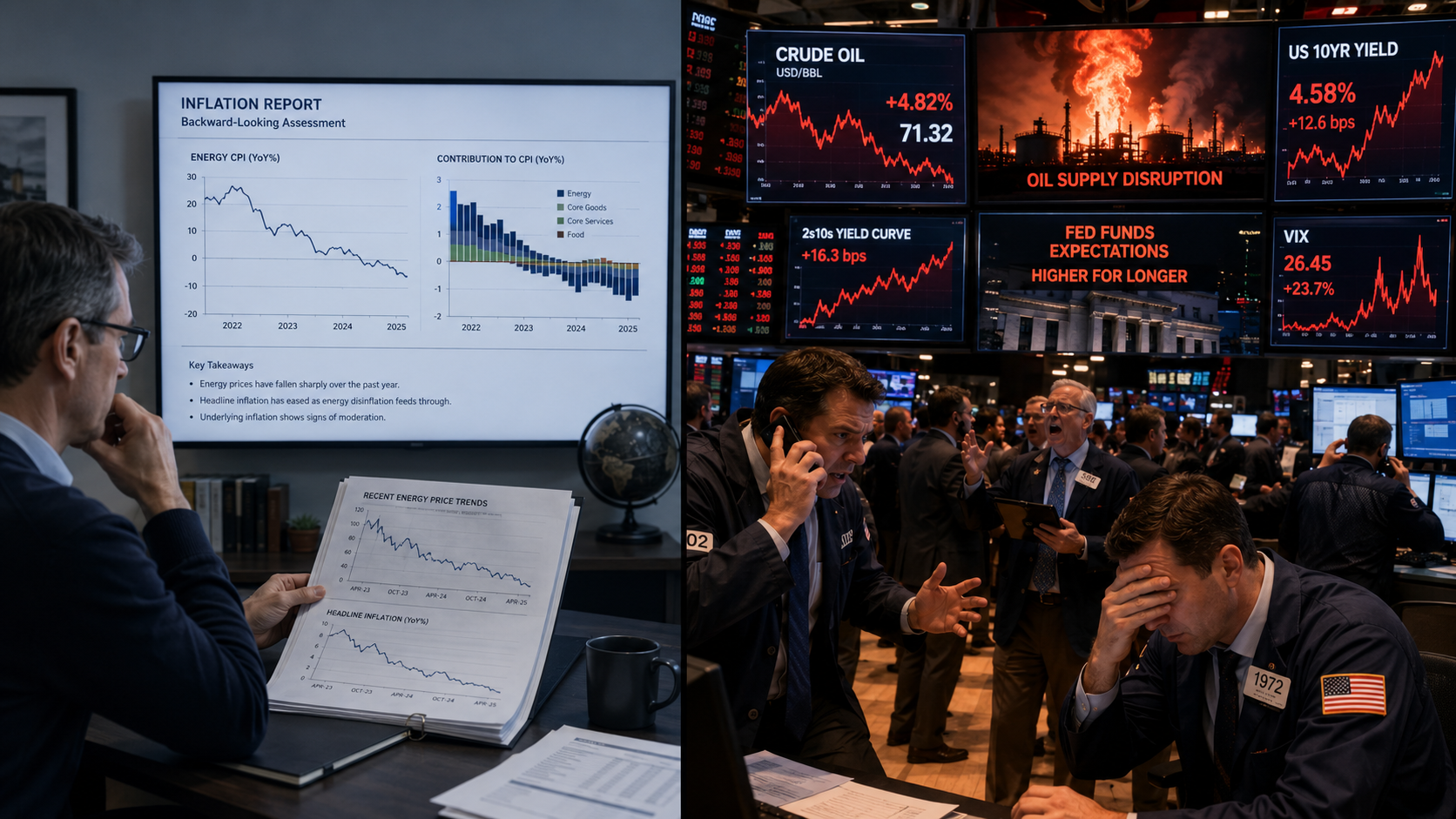
The latest US inflation report illustrates the uncertainty. The Bureau of Labor Statistics said headline CPI fell 0.4% in June from the previous month as energy prices dropped 5.7%. However, annual CPI was still 3.5%, and energy prices were 15.7% higher than a year earlier. Core CPI, excluding food and energy, was unchanged during June and rose 2.6% over 12 months.
These numbers are backward-looking. They captured a June decline in fuel costs, while late-July markets were responding to renewed conflict and another oil-price spike. Traders therefore faced two competing narratives: recent inflation had cooled on a monthly basis, but a fresh energy shock could reverse part of that improvement.
Federal Reserve minutes from the June meeting also showed that officials and staff were already monitoring the conflict’s effect on energy costs, inflation and global policy rates. The minutes noted that headline inflation abroad had risen significantly after the conflict began and that several foreign central banks had responded with rate increases or slower easing.
Gold is not a simple inflation hedge
Gold is often described as protection against inflation, but the time horizon and policy response matter. Over long periods, investors may use gold to preserve purchasing power or diversify against monetary instability. Over days or weeks, however, an inflation shock can be negative for gold when markets believe the central bank will respond forcefully.
The distinction is between inflation itself and the reaction to inflation. If prices rise while the Federal Reserve keeps policy too loose, real rates may fall and confidence in money may weaken, which can support gold. If prices rise and the Fed is expected to tighten aggressively, real yields and the dollar may rise, which can hurt gold. The same inflation headline can therefore produce opposite outcomes depending on credibility, growth conditions and market positioning.
Three paths from here
First, an escalation-led inflation shock: oil rises again, inflation expectations increase and bond yields climb. Gold may receive safe-haven buying, but it could remain under pressure if real yields and the dollar rise faster.
Second, a growth shock: expensive energy damages consumption, trade and business confidence. If recession risk becomes dominant and markets expect rate cuts, yields could fall. That combination would usually be more supportive for gold than war-driven inflation alone.
Third, de-escalation: a durable ceasefire or restored shipping flows could reduce oil prices and inflation fears. Lower yields could help gold, but reduced demand for protection could offset part of the benefit. The net result would depend on which adjustment happens faster.
The US Energy Information Administration’s July outlook demonstrates how quickly assumptions can change. It forecast Brent falling from an average of US$103 a barrel in the second quarter to US$70 in the fourth quarter as supply recovered and inventories rebuilt. Renewed attacks or prolonged disruption could delay that path, while faster normalization could accelerate the decline.

What forex traders should monitor
For beginner and intermediate traders, the key lesson is to follow transmission channels rather than the war headline alone. Brent crude indicates the size of the energy shock. Two-year Treasury yields reveal expectations for near-term Federal Reserve policy. Longer-term real yields measure the opportunity cost of holding a non-yielding asset. The US dollar shows whether global liquidity demand and relative rate expectations are reinforcing the move.
Positioning also matters. After a large rally or crowded long trade, gold can fall when investors take profit, meet margin calls or reduce risk. Central-bank purchases and physical demand may provide longer-term support, but they do not prevent sharp corrections in futures and spot markets.
The current episode does not prove that gold has stopped being a safe haven. It shows that safe-haven behavior is conditional. When war primarily creates fear of financial breakdown or recession, gold may benefit. When it primarily creates an energy-driven inflation shock and a more hawkish rate outlook, bonds and the dollar can become the stronger market story. That balance can change quickly, which makes certainty especially dangerous in this environment.
This article is for informational purposes only and does not constitute financial advice, a trading signal or a forecast of returns.